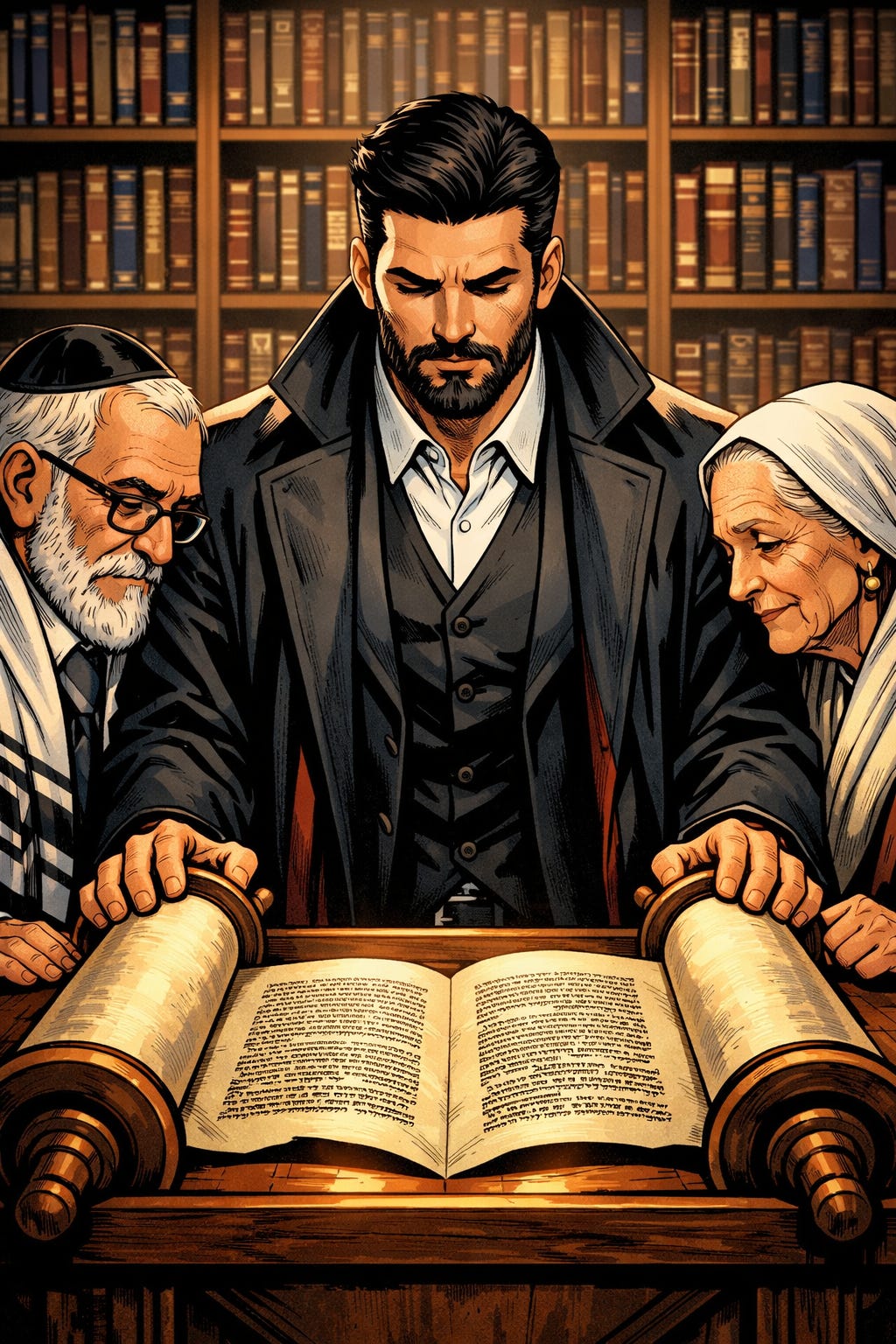
Parashat Naso — Key Points
Highlights of critical parts of the longest Parashat in the Hebraic Reading Schedule.

I. The Levitical Census and Service Assignments (4:21–49)
Gershonites (4:21–28) — The census of the sons of Gershon (B’nei Gershon) covers men aged thirty to fifty, the age range of active tabernacle service. Their assignment was to carry the soft coverings, curtains, and hangings of the Mishkan (tabernacle) — the tent cloths, the covering of the Tent of Meeting, the screen for the entrance, the hangings of the courtyard, and the cords associated with them. They served under the direction of Ithamar, son of Aaron.
Merarites (4:29–33) — The sons of Merari (B’nei M’rari) were responsible for the structural framework — the boards (planks), crossbars, pillars, bases, pegs, and cords of the tabernacle. Each man was assigned specific items by name, ensuring accountability for the heavy, load-bearing elements of God’s dwelling. They also served under the direction of Ithamar.
Census Totals (4:34–49) — The total count of Levitical men eligible for service was 8,580: Kohathites (2,750), Gershonites (2,630), and Merarites (3,200). The number thirty as the age of entry into priestly service carries covenantal weight — it is the age of maturity for service, the age at which Yeshua began his public ministry (Luke 3:23), and the age at which Joseph stood before Pharaoh (Gen. 41:46).
II. Purity of the Camp (5:1–4)
Adonai commands Moses to send outside the camp anyone who is ritually unclean — those with a skin disease (tzara’at), a bodily discharge (zav), or who have had contact with a corpse (tamei la’nefesh). The purpose is explicit: “so that they will not defile their camp, in the midst of which I dwell” (5:3). The holiness of God’s presence requires the holiness of the community that surrounds it. The camp is organized concentrically around the Mishkan — the closer to God’s dwelling, the higher the standard of purity.
III. The Law of Restitution for Wrongs (5:5–10)
When a person sins against another — described here as “acting unfaithfully against Adonai” (lim’ol ma’al b’Adonai) — the offender must confess the sin, make full restitution plus an additional twenty percent (one-fifth), and bring a ram of atonement. If the wronged party has died and has no kinsman-redeemer (go’el) to receive the restitution, the payment goes to the priest. This passage makes clear that wrongs against a neighbor are simultaneously wrongs against God — the horizontal and vertical dimensions of covenant faithfulness cannot be separated.
IV. The Sotah — The Law of Jealousy (5:11–31)
This is one of the most distinctive and difficult passages in Torah. If a man suspects his wife of unfaithfulness but has no witnesses, the matter is brought before the priest. The procedure involves the “waters of bitterness” (mei ha’marim) — holy water mixed with dust from the tabernacle floor, into which the written curses are dissolved. The woman takes an oath and drinks.
If she is guilty, the water brings physical affliction — her body swells, and she becomes a sign of judgment. If she is innocent, she is cleared and blessed with fertility. The procedure removes the matter from the husband’s hands and places it entirely before Adonai. It functions as a divine court of last resort — where no human witnesses exist, God himself adjudicates. The grain offering brought with it (minchat k’na’ot — “offering of jealousy”) is notably plain: barley flour with no oil or frankincense, reflecting the gravity and austerity of the occasion.
V. The Nazarite Vow (6:1–21)
Writer’s Note: Please don’t confuse this with Nazarine, or other words that are prefixed with Nazar-. Yes, the core of this word is important, but as far as the Torah is concerned, you need to keep the context of this use case.
The Nazarite vow (neder ha’nazir, from nazar — “to separate” or “to consecrate”) is a voluntary act of heightened consecration to Adonai, open to both men and women. Three restrictions define the vow:
No products of the vine — not wine, vinegar, grape juice, grapes, or raisins. Nothing from the grapevine, from seed to skin. This is a renunciation of ordinary pleasure and celebration for the sake of focused devotion.
No cutting of the hair — the hair grows freely as a visible, public sign of the vow. The uncut hair is described as “the consecration of his God upon his head” (nezer Elohav al rosho, 6:7). The Nazarite carries the mark of his separation where everyone can see it.
No contact with the dead — not even for a father, mother, brother, or sister. This restriction parallels the standard applied to the High Priest (Lev. 21:11). For the duration of the vow, the Nazarite lives under a priestly level of holiness.
If accidental defilement occurs through sudden contact with death, the Nazarite must shave, undergo purification, bring sin and burnt offerings, and restart the entire vow period — the previous days “fall away” (yip’lu, 6:12) because the consecration was broken.
At the completion of the vow, the Nazarite brings three offerings (a male lamb for a burnt offering, a female lamb for a sin offering, and a ram for a peace offering), along with a basket of unleavened bread, grain offerings, and drink offerings. The hair — the visible sign of the vow — is shaved and placed on the fire under the peace offering. The consecration is returned to Adonai.
Notable Nazarites in Scripture include Samson (from birth, by divine command — Judges 13:5), Samuel (dedicated by Hannah — 1 Sam. 1:11), and John the Baptist (Luke 1:15). Paul himself appears to have undertaken a Nazarite-type vow (Acts 18:18; 21:23–26).
VI. The Aaronic Blessing — Birkat Kohanim (6:22–27)
This is among the most significant passages in the entire Torah — the words Adonai himself composed and commanded the priests to speak over Israel:
Y’varekh’kha Adonai v’yishm’rekha — “May Adonai bless you and keep you”
Ya’er Adonai panav eleikha vichunekha — “May Adonai make His face shine upon you and be gracious to you”
Yisa Adonai panav eleikha v’yasem l’kha shalom — “May Adonai lift up His face toward you and give you peace”
The blessing is structured in three ascending lines of increasing length (3 words, 5 words, 7 words in Hebrew), building from protection to grace to peace (shalom). The numeric progression: 3, 5, 7 — mirrors the biblical numerology of divine completeness (3), grace (5), and spiritual perfection (7).
The final verse provides the theological key: “So they shall put My name upon the sons of Israel, and I will bless them” (6:27). The priests pronounce the blessing, but God himself performs it. The name of Adonai placed upon His people is the mechanism of the blessing — His name is His character, His presence, and His covenant faithfulness.
This blessing has been in continuous liturgical use for over three thousand years. The oldest known copy, inscribed on silver scrolls found at Ketef Hinnom (near Jerusalem), dates to approximately the 7th century BC — making it the oldest surviving text of Scripture ever discovered.
VII. The Tribal Offerings at the Dedication of the Altar (7:1–88)
On the day Moses finished setting up the tabernacle and anointed it, the twelve tribal leaders (nesi’im) brought their offerings for the dedication of the altar. Each leader brought his offering on a separate day, over twelve consecutive days. The offerings are recorded in full for each tribe — identical in content, yet each listed individually by name:
Each tribal leader brought:
One silver dish weighing 130 shekels
One silver basin weighing 70 shekels (both filled with fine flour mixed with oil for a grain offering)
One gold pan weighing 10 shekels, filled with incense
One young bull, one ram, one male lamb (for burnt offering)
One male goat (for sin offering)
Two oxen, five rams, five male goats, five male lambs (for a peace offering)
The order follows the camp's marching order established in Numbers 2: Judah first, then Issachar, Zebulun, Reuben, Simeon, Gad, Ephraim, Manasseh, Benjamin, Dan, Asher, and Naphtali last.
The repetition — twelve times, word for word — is deliberate. Each tribe’s offering is recorded with equal dignity and equal specificity. No tribe’s contribution is abbreviated or subsumed under, “and the rest did the same.” Before Adonai, each tribe stands as its own witness, named and honored individually in the permanent record of Scripture.
Totals for all twelve tribes combined:
12 silver dishes, 12 silver basins (total silver: 2,400 shekels)
12 gold pans (total gold: 120 shekels)
12 bulls, 12 rams, 12 male lambs with grain offerings (burnt offering)
12 male goats (sin offering)
24 bulls, 60 rams, 60 male goats, 60 male lambs (peace offering)
The number twelve dominates — governmental completeness, the full people of God acting in unity. The gold totaling 120 shekels carries the weight of divine transition and Spirit-outpouring (120 disciples in the Upper Room; Moses’ age at death; 120 priests at Solomon’s Temple dedication).
VIII. The Voice from the Mercy Seat (7:89)
The portion closes with a single, extraordinary verse: “When Moses entered the Tent of Meeting to speak with Him, he heard the voice speaking to him from above the mercy seat (kapporet) that was on the Ark of the Testimony, from between the two cherubim; and He spoke to him.”
This is the culmination of everything that precedes it — the Levites are assigned, the camp is purified, restitution is ordered, jealousy is adjudicated, the Nazarite is consecrated, the blessing is spoken, and the altar is dedicated. Only then does the voice speak. The entire portion moves from human preparation to divine communication. The tabernacle is not merely a structure. It is the place where Adonai speaks — from between the cherubim, above the place of atonement, in the midst of His people.
Thematic Summary
Parashat Naso moves through a deliberate sequence: sacred service is assigned, the community is purified, wrongs are made right, marital holiness is upheld, voluntary consecration is honored, God’s blessing is spoken over His people, the altar is dedicated by the unified tribes, and the voice of Adonai speaks from the mercy seat. The architecture of the portion is the architecture of the relationship with God — preparation, purification, consecration, blessing, worship, and communion.
The longest Torah portion carries the fullest picture of what it means for a holy God to dwell in the midst of a people He is making holy.